
Transforming Parking in Retail
Apr 10, 2026
How Digitally Managed Systems Are Changing the Customer Experience
With live implementation across retail locations including Choithrams
Parking is often the first and last touchpoint in a retail visit, yet it has traditionally been managed through manual processes, ticketing systems, and fragmented operations.
Today, that is changing.
Across high-traffic retail environments, parking is becoming digitally managed, structured, and designed to support continuous vehicle flow — improving both operational efficiency and the overall customer experience.
The Shift from Traditional to Digitally Managed Parking
Conventional parking systems rely on physical tickets, manual monitoring, and disconnected processes. This often leads to inefficiencies, congestion, and limited visibility for operators.
Digitally managed parking systems replace these limitations with a more structured and automated approach.
Vehicles are recognized automatically upon entry, parking sessions are recorded digitally, and exit processes are streamlined without the need for tickets or manual intervention.
This transforms parking from a fragmented process into a coordinated system that supports overall retail operations.
Real-World Implementation in Retail
This transformation is already active across selected high-traffic retail locations, where PARKONIC systems are live and operating, with continued rollout across the UAE.
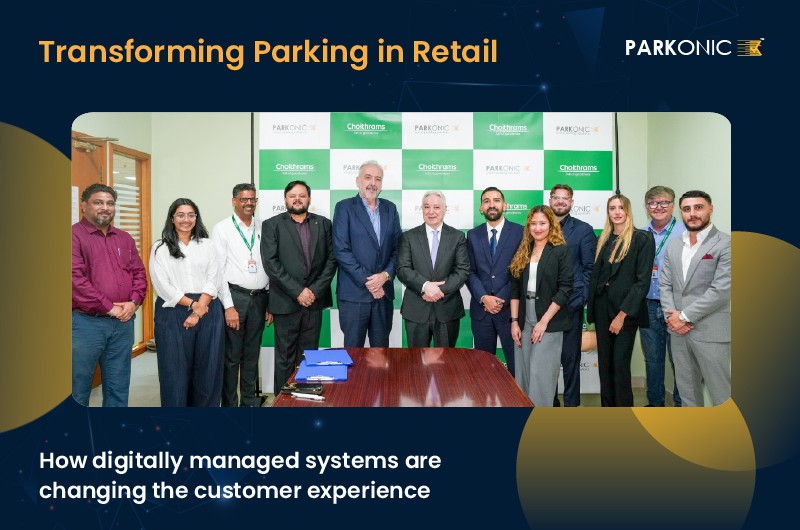
Through its collaboration with Choithrams, PARKONIC is implementing digitally managed parking systems that align with the operational needs of retail environments while supporting a smoother and more seamless customer journey.
How Payment Works in Digitally Managed Parking
Payment in digitally managed parking environments is designed to be simple and flexible.
Users can complete payment before exit by scanning the on-site QR code and following the instructions.
Alternatively, if no manual payment is completed, parking is processed automatically upon exit through available payment methods linked to the vehicle, including PARKONIC+ or SALIK where applicable.
This ensures a seamless experience while maintaining structured and transparent parking operations.
Operational Benefits for Retail Environments
For retail operators, parking directly impacts traffic flow, customer turnover, and operational efficiency.
Digitally managed parking enables:
- structured vehicle movement
- reduced congestion
- real-time visibility of parking activity
- reduced reliance on manual processes
This creates a more predictable and efficient parking environment, especially in high-demand locations.
A Seamless Experience for Customers
For customers, the experience becomes significantly simpler.
There are no tickets to manage and no manual steps required.
From entry to exit, the process is designed to be seamless — allowing customers to focus on their visit rather than the parking process.
Parking as Part of the Retail Journey
As retail environments evolve, parking is no longer a separate function.
It becomes an integrated part of the overall experience — influencing accessibility, convenience, and customer satisfaction.
Digitally managed systems ensure that parking supports, rather than disrupts, the retail journey.
Conclusion
Parking is no longer just supporting infrastructure — it is becoming an essential component of how retail environments operate.
Through digitally managed parking systems, PARKONIC is enabling this shift, helping locations operate more efficiently while delivering a seamless experience for customers.
This is not simply an upgrade in technology.
It is a shift in how parking supports retail.