
Why Smart Mobility Platforms Must Be Built for Scale
Dec 30, 2025
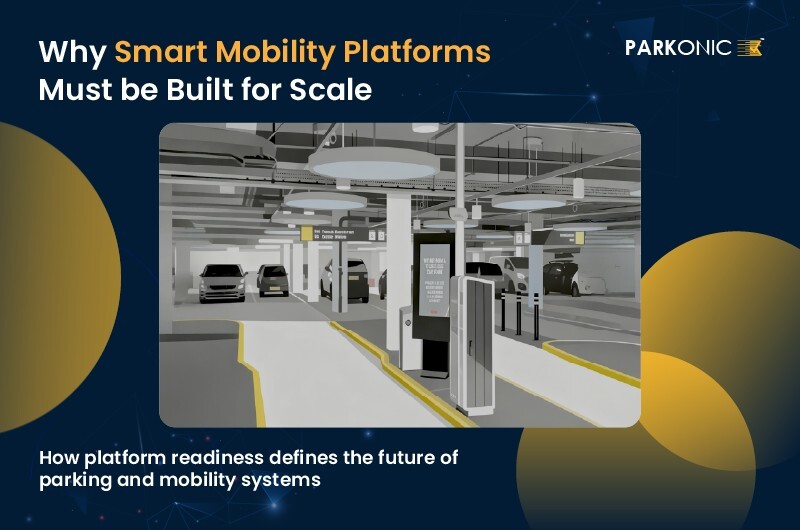
As cities and destinations evolve, mobility systems are being asked to do far more than manage movement. They must adapt to growing complexity, integrate with diverse environments, and perform consistently as operations expand.
Yet many smart mobility solutions are still built as isolated tools — designed for a single location, a specific use case, or a limited scope. While these systems may function well in the short term, they often struggle as scale, regulation, and operational demands increase.
This is where the distinction between solutions and platforms becomes critical.
From Isolated Solutions to Platform Thinking
Traditional mobility systems tend to grow reactively. As new locations or requirements emerge, additional layers are added — different tools, manual workarounds, and disconnected processes. Over time, this fragmentation introduces inefficiencies, inconsistent standards, and operational risk.
A platform-based approach reverses this logic.
Instead of adapting mobility systems market by market, platforms are designed from the outset to support scale. They provide a unified foundation that can operate across different environments while maintaining consistency, accuracy, and control.
This shift is not about speed of expansion. It is about readiness.
Platform Readiness as Infrastructure
PARKONIC OS was developed as a Smart Mobility Operating System — not as a location-specific parking solution, but as a digital infrastructure capable of supporting growth without fragmentation.
At its core, platform readiness means:
- Consistency across different environments and destination types
- Automation that reduces operational friction as complexity increases
- Accuracy that remains reliable at scale
- Unified Architecture that eliminates the need to reinvent processes for each new deployment
By focusing on infrastructure rather than isolated features, platform-based mobility systems enable operators to scale with confidence — without compromising performance or user experience.
Why Scale Is a Design Decision
True scalability is not achieved through expansion alone. It is achieved through deliberate system design.
Platforms that endure are those built with the expectation that requirements will evolve — regulations will differ, environments will change, and complexity will grow. Preparing for that reality from the beginning is what separates long-term mobility infrastructure from short-term solutions.
In this context, scale is not a claim. It is a capability.
Building for What Comes Next
As smart cities and destinations continue to grow, mobility platforms will play an increasingly central role in how movement is managed, optimized, and integrated into broader urban systems.
The future of smart mobility belongs to platforms that are calm, consistent, and structurally ready — platforms that do not rely on constant customization, but on a unified operating foundation.
Building for scale is not about being louder or faster.
It is about being prepared.