
Scaling Digital On-Street Infrastructure
Mar 24, 2026
Why Urban Performance Starts at the Curb
Cities are no longer judged only by skyline, density, or development speed.
They are judged by how smoothly they function.
Urban performance today depends on invisible systems — the layers that regulate movement, enable compliance, and ensure that infrastructure operates with precision.
On-street parking is one of those layers.
For decades, curbside parking has remained operationally stagnant across global cities — manually enforced, loosely regulated, fragmented across zones, and disconnected from real-time digital systems.
That model no longer supports modern urban environments.
On-Street Infrastructure as a Performance Layer
As mobility ecosystems evolve, structured on-street infrastructure becomes critical.
Digitized curbside management directly impacts:
- Traffic circulation efficiency
- Zone compliance and enforcement alignment
- Revenue transparency
- District-level flow optimization
- Real-time operational visibility
When curbside systems are fragmented, congestion increases.
When infrastructure is structured and automated, cities move with precision.
This is the shift.
Scaling Structured On-Street Operations in Dubai
Across Dubai, PARKONIC is scaling structured on-street smart parking infrastructure — embedding automated systems into regulated zones.
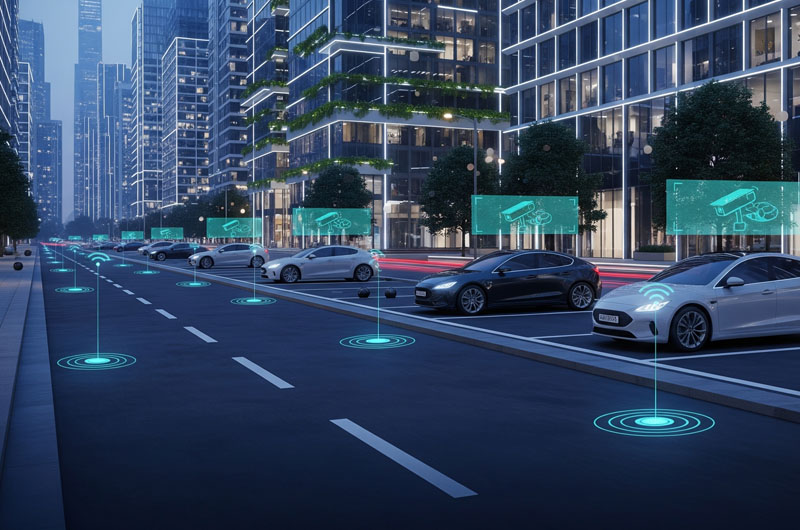
Through digital license plate recognition, integrated payment systems, and real-time operational monitoring, curbside parking transitions from static space allocation to dynamic infrastructure management.
This is not about parking convenience.
It is about:
- Enabling compliance
- Supporting district-level clarity
- Improving curb turnover
- Strengthening urban regulation
- Reducing friction at scale
Urban environments with high expectations require infrastructure that performs predictably.
Built for Complex City Environments
Dubai represents one of the most operationally demanding urban markets in the region — diverse districts, mixed-use developments, residential zones, commercial hubs, and tourist destinations operating simultaneously.
Scaling on-street smart parking across such environments requires:
- Precision technology
- System-level integration
- Payment alignment across zones
- Enforcement support mechanisms
- Infrastructure designed to evolve
Structured curbside systems are no longer optional. They are foundational to how cities perform.
A Model Beyond One Market
While this expansion is taking place within Dubai, the model is not market-specific.
The same operational framework — automated recognition, integrated payment architecture, structured zone management, and scalable system control — applies to any city transitioning toward regulated digital mobility environments.
Urban performance does not begin with autonomous vehicles or futuristic transport systems.
It begins at the curb.
Smart Mobility. Seamless Every Stop.